Advanced Ultrasonic Systems for Thin Film Coating
Thin Film Coating is a critical process in modern manufacturing, enabling precise control of material properties and surface functionality. Ultrasonic spray coating technology offers a highly efficient and environmentally friendly way to deposit uniform thin layers on a wide range of substrates. By using ultrasonic atomising nozzles that operate through high-frequency vibration, liquids are converted into fine, consistently sized droplets, producing exceptionally smooth and homogeneous coatings.
Unlike traditional air-spray methods that rely on high-pressure gas, ultrasonic spray coating atomises materials gently, avoiding turbulence, splashing, and overspray. This not only improves coating accuracy but also increases material utilisation by up to four times compared to conventional systems, making it an ideal choice for high-value or sensitive materials.

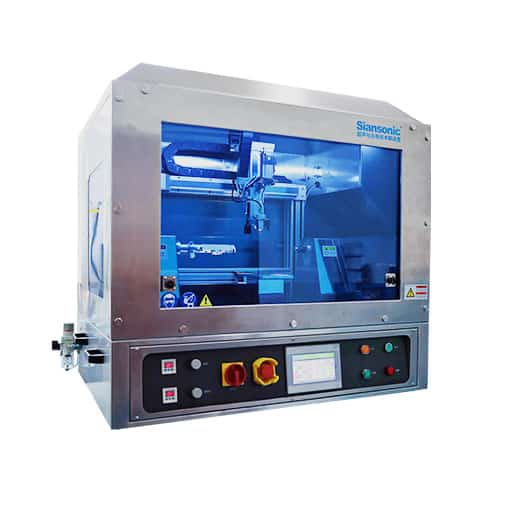
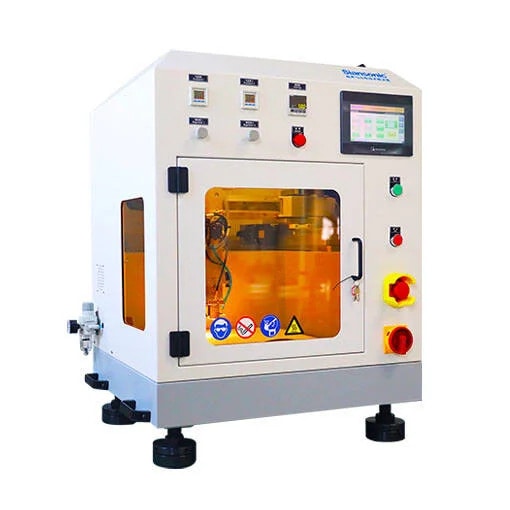
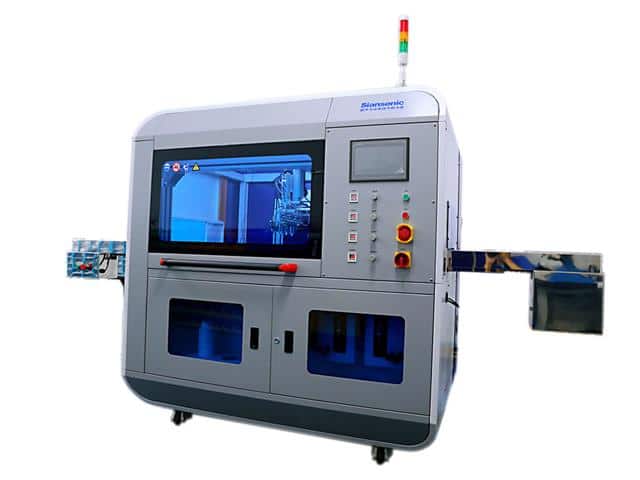
Precision ultrasonic coating system designed for balloon catheters ensures uniform, pinhole-free coatings for medical applications.
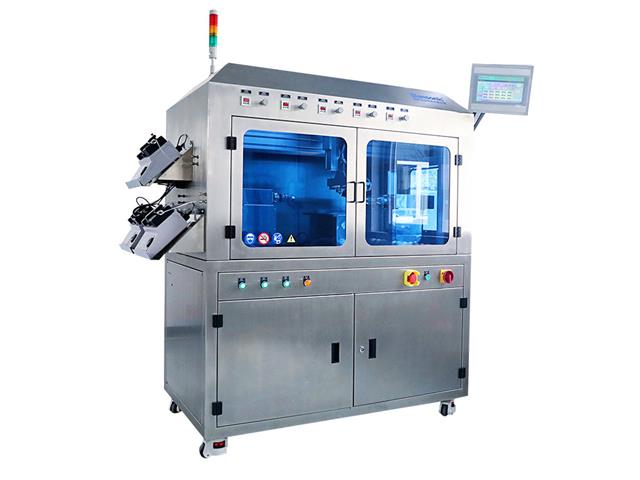
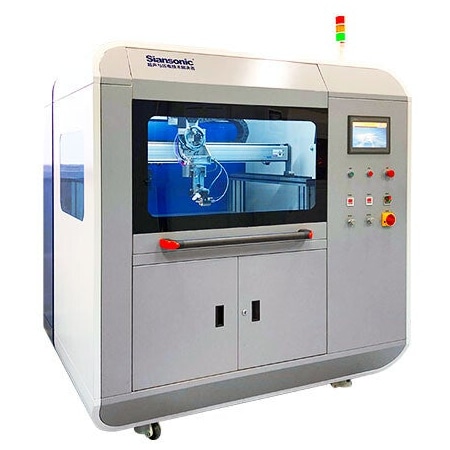
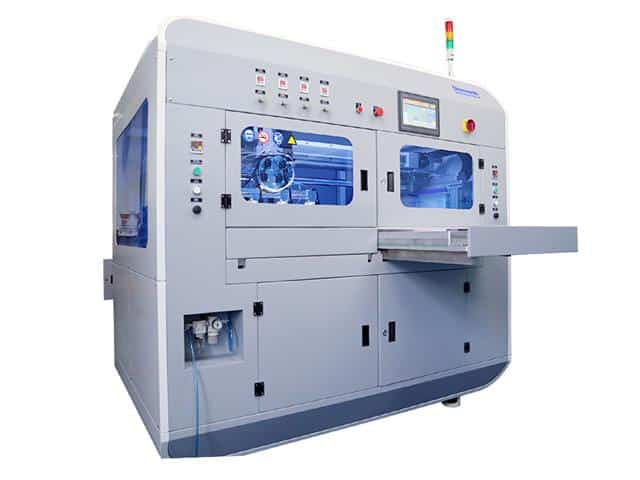
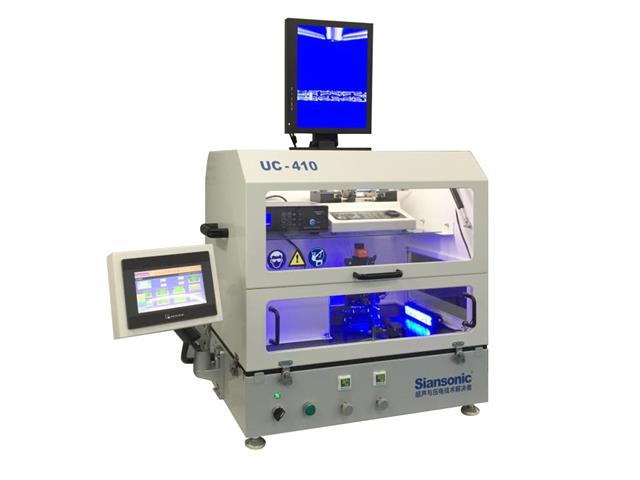
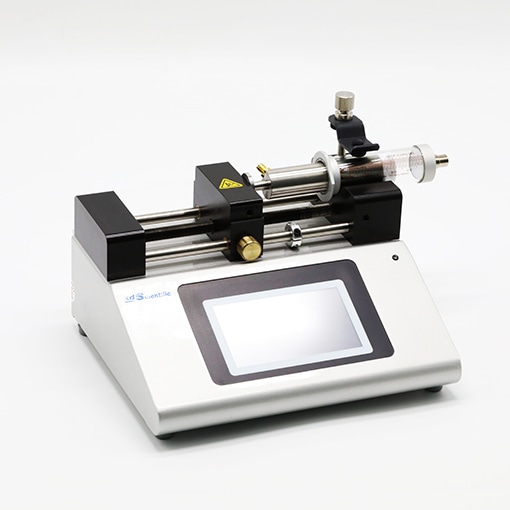
Modern ultrasonic coating systems are designed for continuous production and stable operation. Precision metering pumps ensure consistent liquid delivery for long durations, allowing 24-hour process stability and uniform coating thickness across large-area substrates. Auxiliary components such as carrier-gas control, heating plates, vacuum platforms, and exhaust systems enable full environmental control and repeatability, ensuring each layer meets stringent quality requirements.
This stability and precision make ultrasonic spray coating suitable for both laboratory-scale research and high-volume industrial manufacturing, where consistent results are essential.
Because the atomisation in ultrasonic spray coating is driven by acoustic energy rather than kinetic gas energy, the process achieves much higher transfer efficiency and significantly reduces waste. The low-velocity droplets gently land on the substrate, creating even, defect-free layers without damaging underlying surfaces. The technique also allows for precise adjustment of coating parameters such as droplet size, flow rate, and layer thickness, making it adaptable to a wide variety of materials and applications.
Thin Film Coating using ultrasonic spray systems is widely adopted across multiple industries and research fields, including:
Wafer cleaning and photoresist coatings for semiconductor manufacturing
Mask cleaning and CMP (Chemical Mechanical Polishing) processes
Etching and development in microfabrication
Photoresist stripping and lift-off applications
Lens cleaning and optical layer deposition
Catalyst-coated membranes (CCM) for fuel cells
Functional layers for thin-film solar cells and transparent conductive coatings
Hydrophilic, hydrophobic, and anti-reflection (AR) coatings
Thermal insulation and protective layers for electronic devices
Precision cleaning and coating for display screens and other microelectronic components
Uniform Coating Quality: Produces highly homogeneous layers even on complex geometries.
High Material Efficiency: Up to 75–90 % transfer efficiency, reducing material waste.
Gentle Process: Minimal droplet velocity prevents surface damage.
Versatile Compatibility: Works with polymers, catalysts, photoresists, nanoparticles, and organic solvents.
Scalable Design: Suitable for small R&D setups through to industrial production lines.
Environmentally Responsible: Lower fluid consumption and reduced overspray emissions.
As industries demand more precise, durable, and functional coatings, ultrasonic spray coating continues to set the standard for quality and sustainability. The technology’s ability to produce consistent results, control layer thickness at the micron level, and reduce resource consumption positions it as a cornerstone of next-generation Thin Film Coating solutions.

41/51 Wentworth Ave, Pagewood,
NSW 2035
Sales@prof-tek.com
Powered by BsharpTech