Megasonic cleaning is the high-frequency end of sonic cleaning technology, operating at 750 kHz to 1 MHz, an order of magnitude above ultrasonic. The result is a fundamentally different cleaning mechanism that removes sub-micron contaminants from delicate substrates without the surface damage risk of ultrasonic cavitation. This article explains the physics, the frequency selection logic, and the specific PCB, medical device, and semiconductor applications where megasonic outperforms every alternative.
| Band | Frequency Range | Mechanism | Best For |
|---|---|---|---|
| Low-Frequency Ultrasonic | 20–40 kHz | Aggressive cavitation | Heavy industrial parts, robust geometries |
| High-Frequency Ultrasonic | 40–200 kHz | Mild cavitation + microstreaming | Precision parts, medical instruments |
| Megasonic | 750 kHz–1 MHz | Acoustic streaming + boundary layer disruption | PCBs, semiconductor wafers, MEMS, balloon catheters |
The critical inversion point: as frequency increases, cavitation intensity drops, but boundary-layer disruption efficiency increases. At megasonic frequencies, bubble implosions are so small they cannot damage even a 5-nanometer feature on a silicon wafer, while still effectively dislodging sub-micron particles.
Standard ultrasonic cleaning relies on cavitation: low-pressure zones in the cleaning liquid generate gas bubbles that implode against the part surface. The implosion force shears contaminants free. This works brilliantly on robust substrates, but the implosion pressure (estimated at 1,000 atm locally) can damage delicate features.
Megasonic cleaning operates above the cavitation threshold for most cleaning solvents. Instead of bubble implosion, the dominant mechanism is acoustic streaming, the megasonic waves drive a directed fluid flow that compresses the boundary layer at the part surface. Sub-micron particles trapped in that boundary layer are physically swept off by the flow shear.
Two consequences matter for buyers:
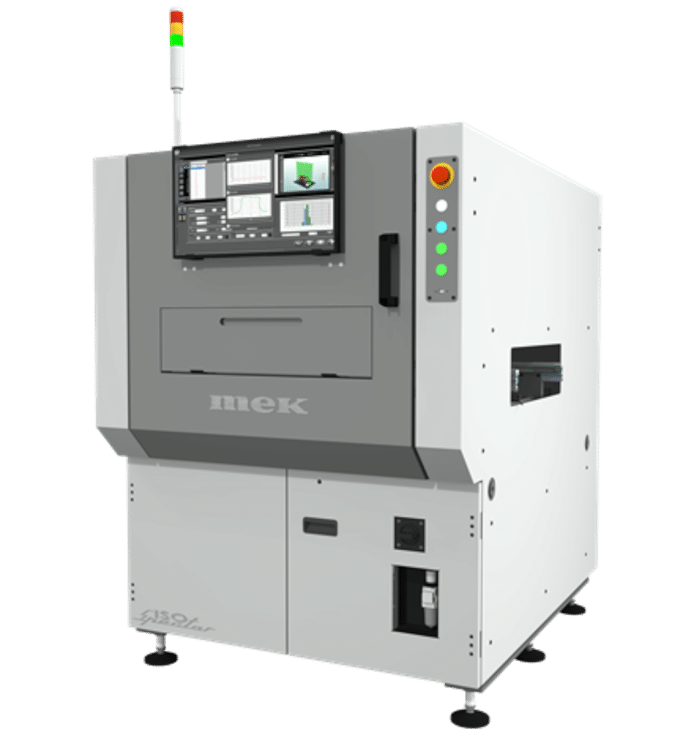
Flux residues left after solder reflow contain sub-micron particles that increase ionic contamination and cause field failures. Megasonic cleaning at 1 MHz can remove these residues without disturbing 0201 chip components, fine-pitch BGAs, or wire-bonded modules. For Australian electronics manufacturers serving aerospace, medical, or automotive markets, this is increasingly a tender requirement.
The semiconductor industry has used megasonic cleaning since the 1990s for post-CMP (chemical mechanical planarisation) wafer cleaning. Particles down to 50 nm are routinely removed. As Australian semiconductor packaging and MEMS work expands, the same cleaning chemistry transfers directly.
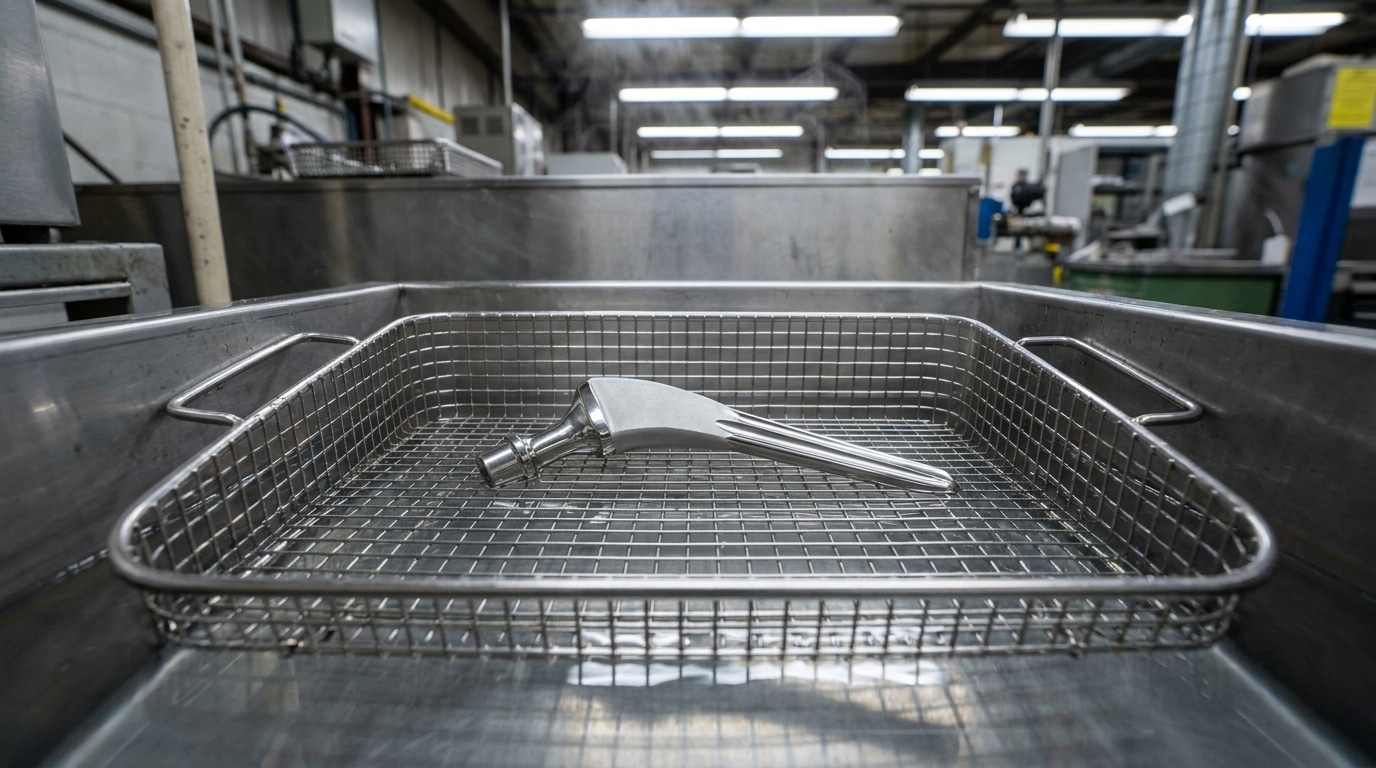
Sub-micron debris on a balloon catheter or coronary stent presents a patient-safety risk. Megasonic cleaning achieves ISO 13485 cleanliness specifications without the surface stress that ultrasonic can introduce. The ProfTek Benchtop Balloon Catheter Coating System pairs megasonic cleaning with precision coating in a single integrated workflow.
Megasonic cleaning is the standard for high-end optical preparation before coating. The non-damaging mechanism preserves surface figure to nanometer tolerance.
For a full comparison, see our earlier article Megasonic vs Ultrasonic Cleaning: Which Is Right for Your Application?. The short answer:
Key parameters when comparing systems:
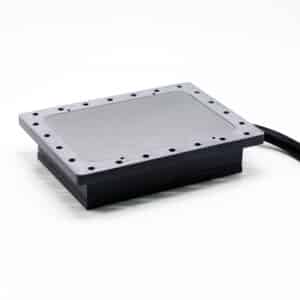
ProfTek supplies the full megasonic cleaner range across Australia and New Zealand, bath, cover, and integrated workstation formats. For a specification review against your specific contamination, substrate, and throughput requirements, contact our engineering team with your part description and SDS for current contaminants.
Megasonic systems run continuous transducer service lives of 3–5 years before replacement. Cleaning chemistry typically requires replacement every 1–3 months depending on contaminant load. For Australian sites running 24/7 lines, ProfTek can supply scheduled transducer replacement and chemistry top-up under a service contract, matched to your maintenance window.